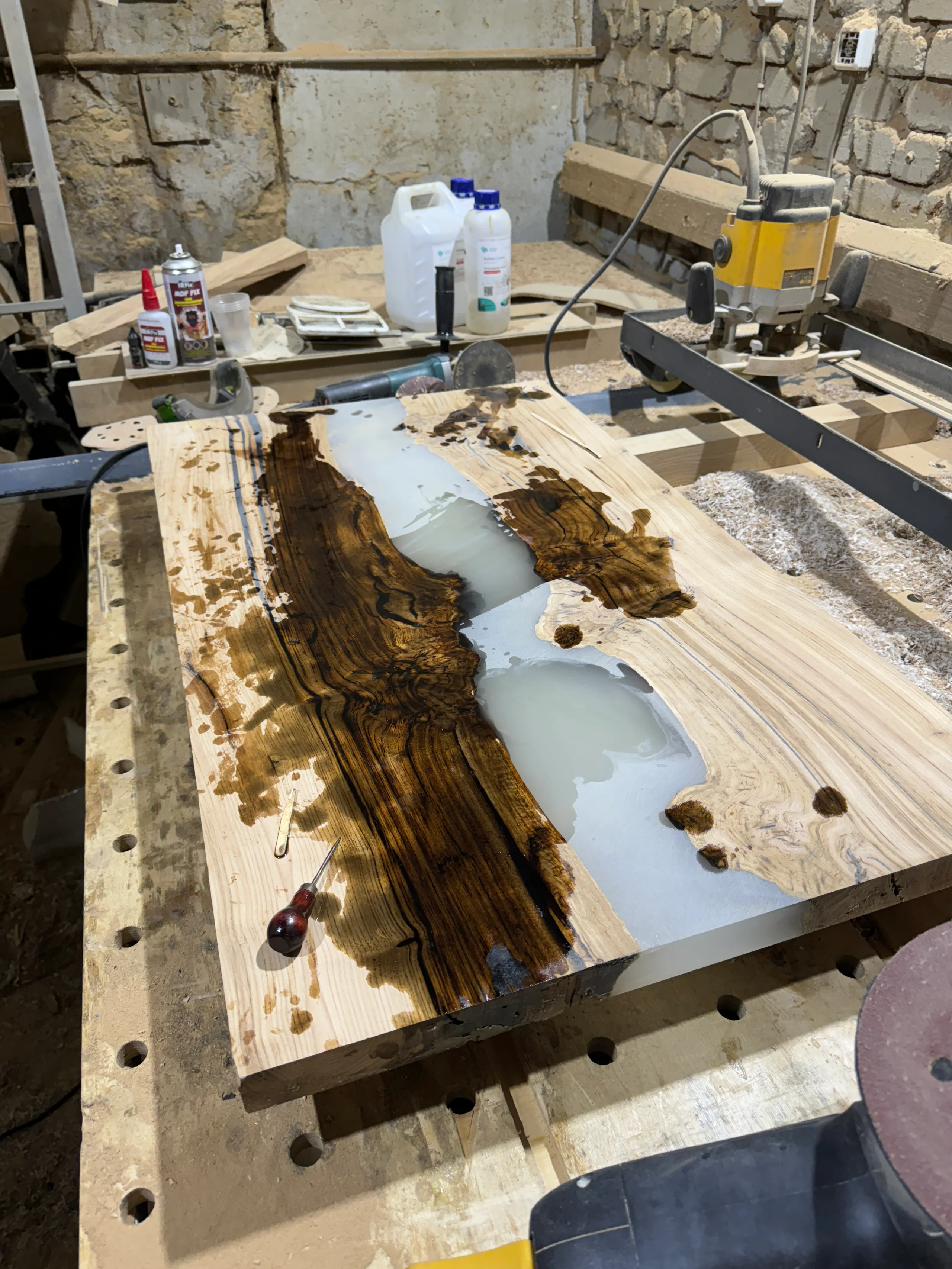
Custom Slab Tabletop
Sweet chestnut Castanea sativa · Black mulberry Morus nigra · Ash Fraxinus · Oak Quercus · Osage orange Maclura pomifera
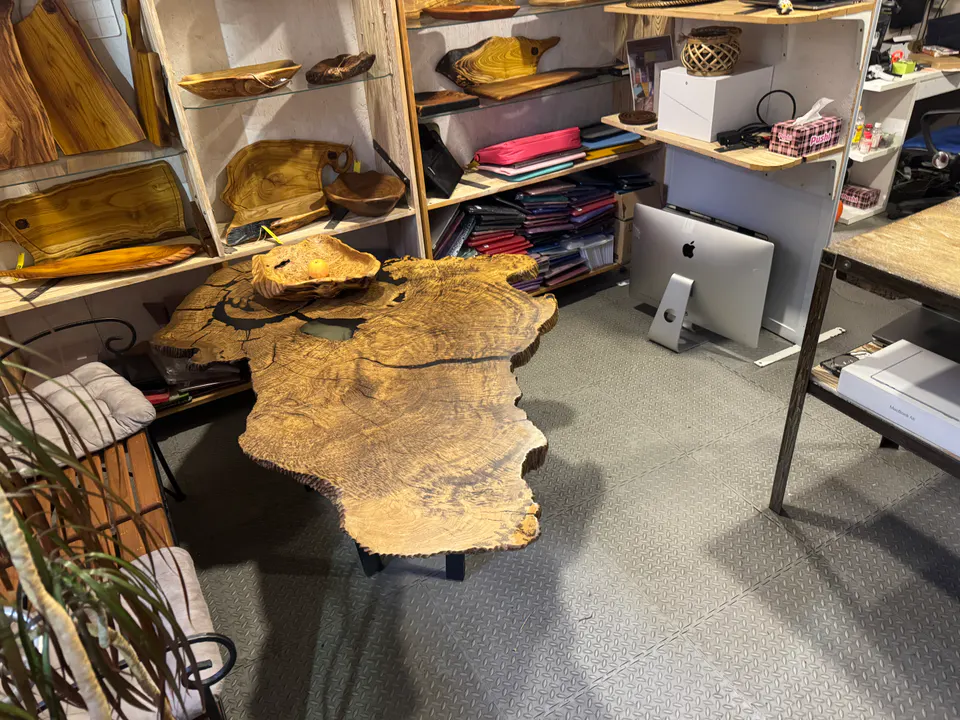
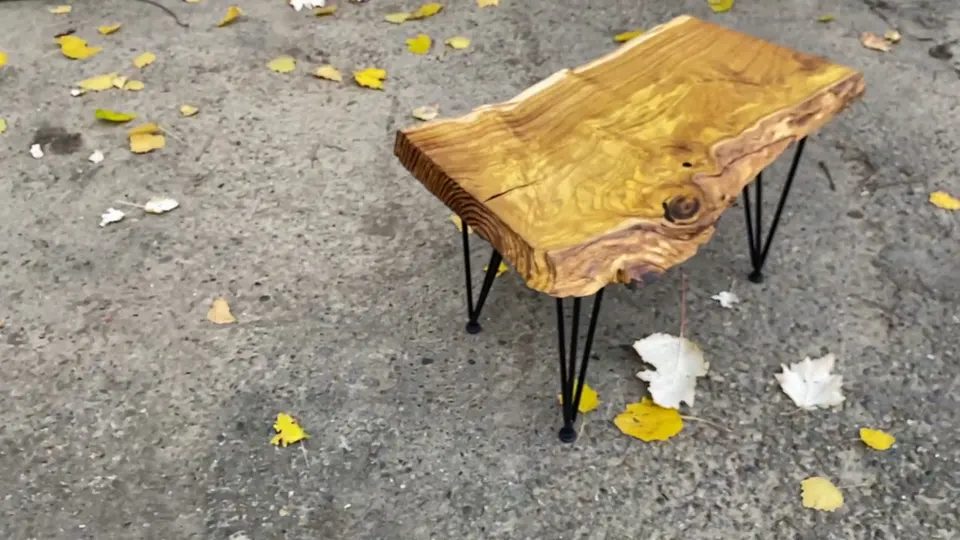
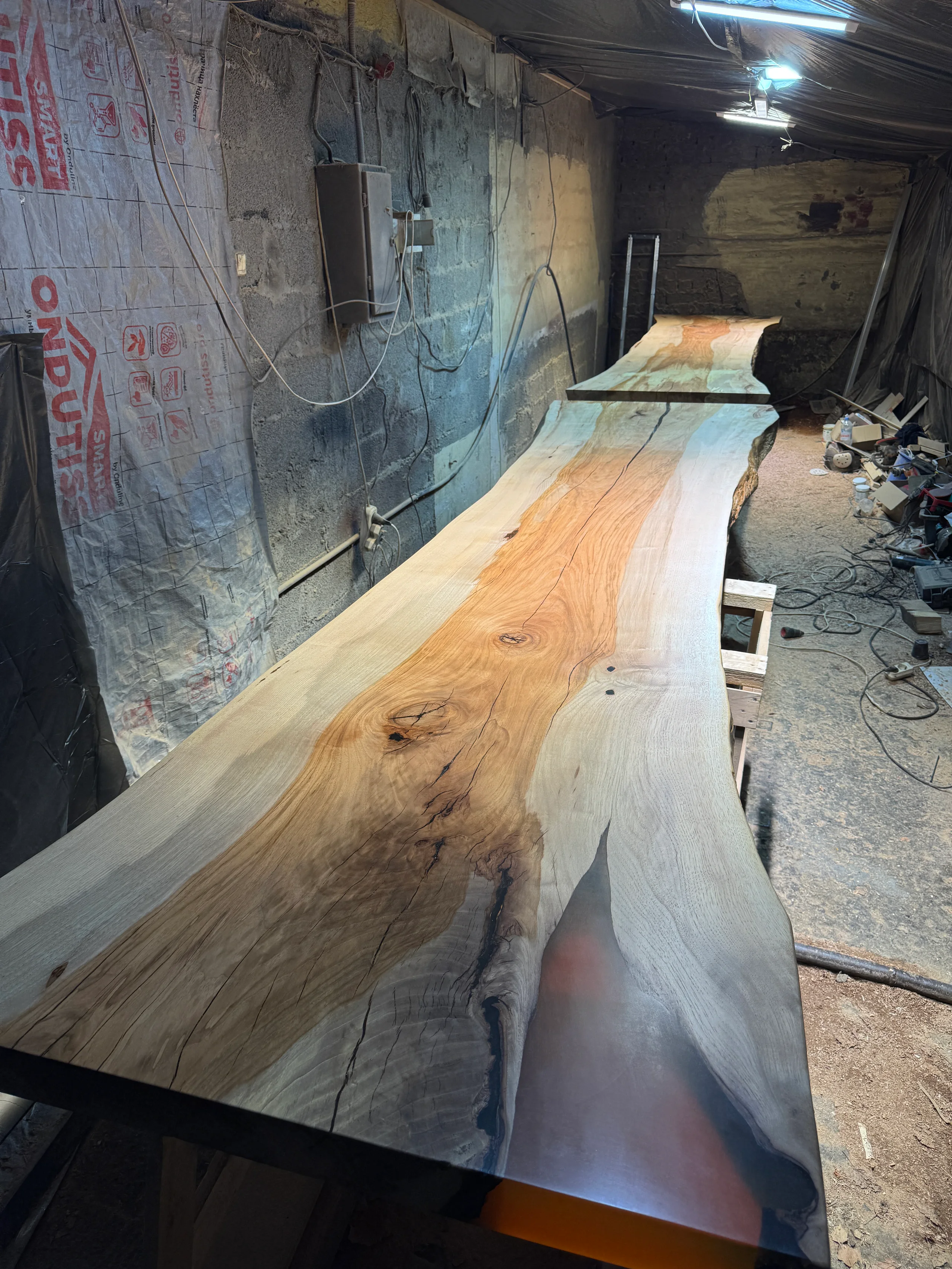
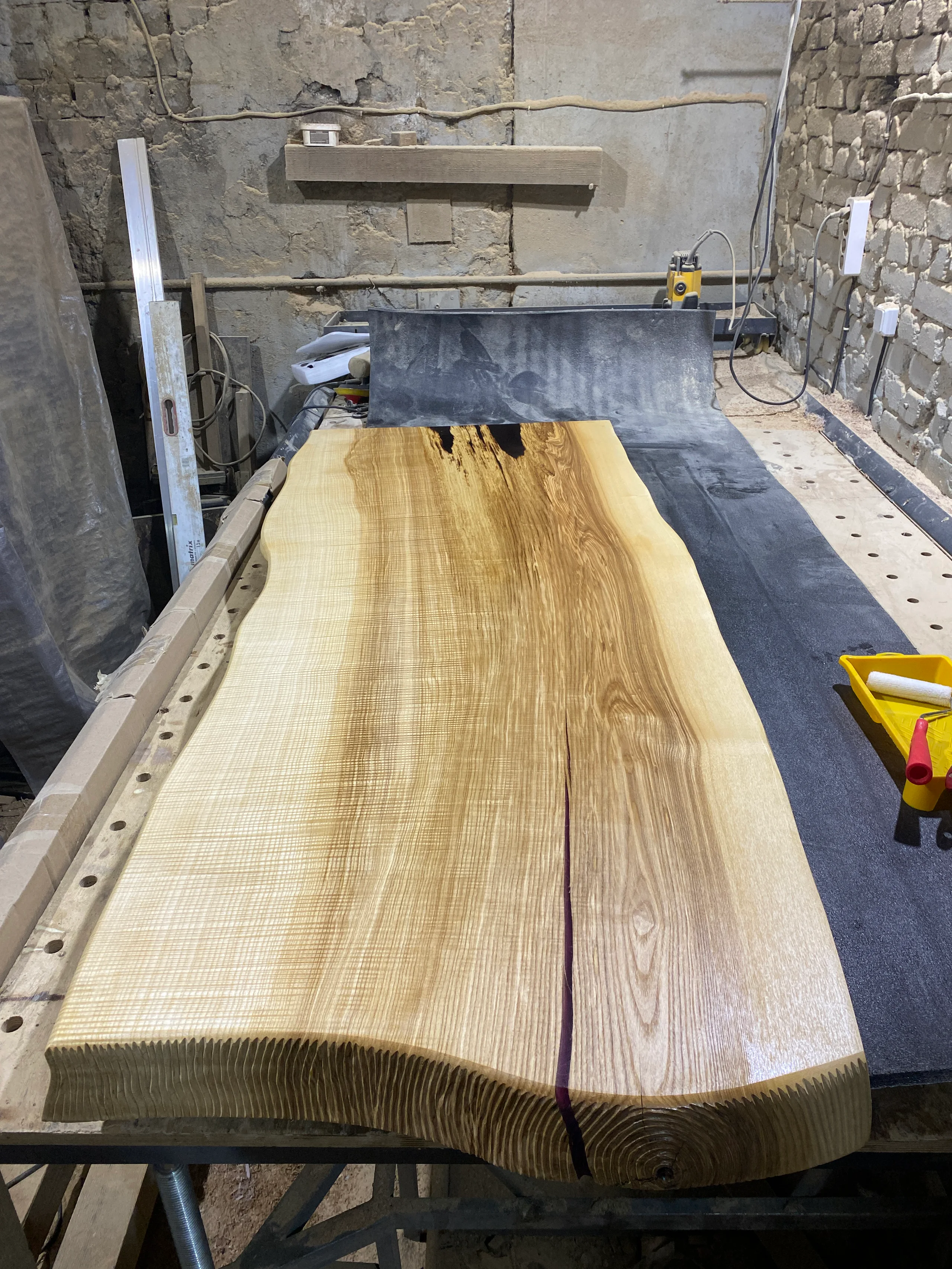
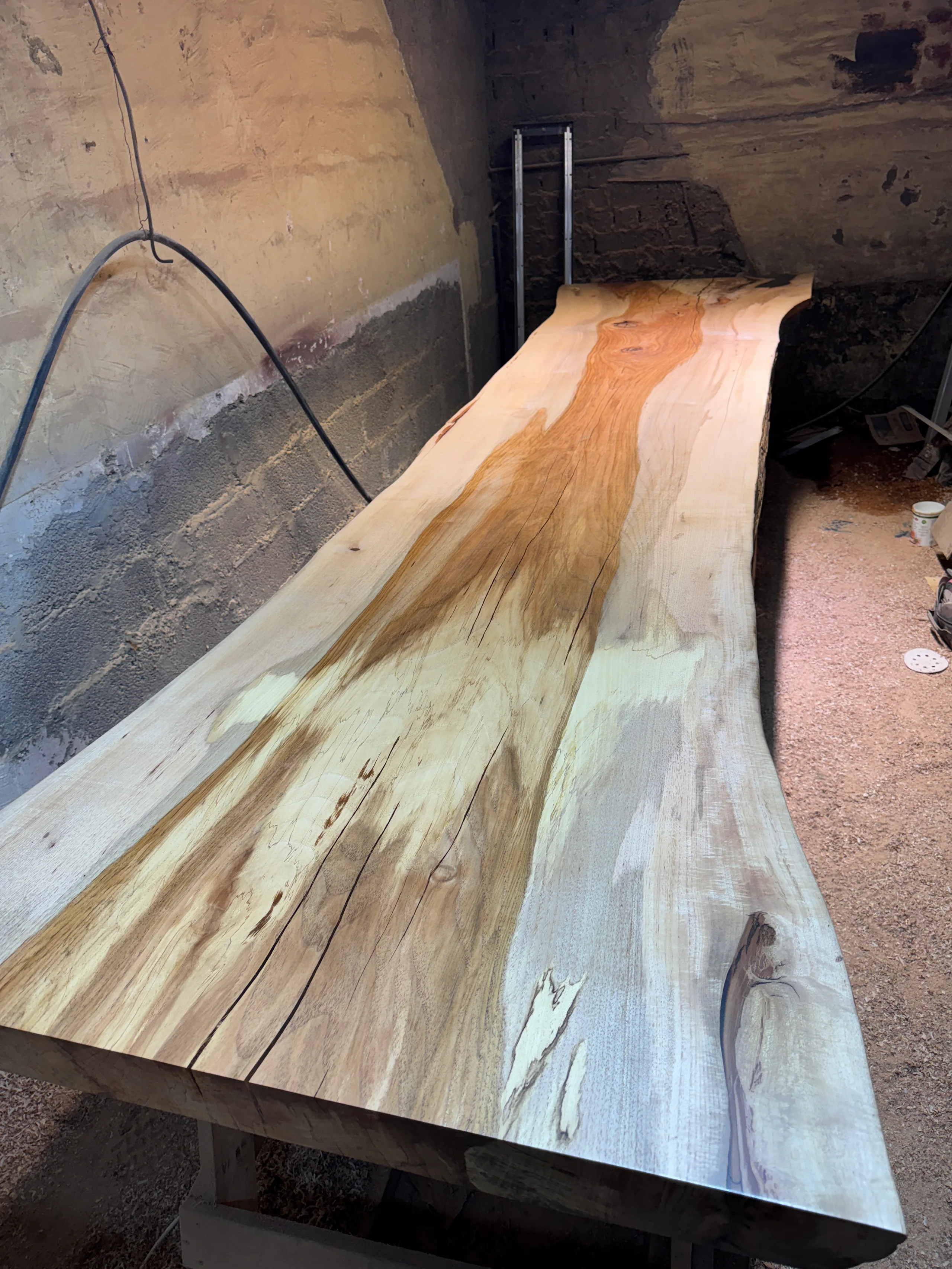
I'll match a slab to your size and interior from my own stock: chestnut, mulberry, ash, beech, honey locust, oak. You can choose a specific slab from photos.
from 30,000 ₽ per m²
Payment and shipping are arranged once availability is confirmed. Pick-up in Sochi, shipping across Russia by freight carrier; international shipping can be discussed. Details
- Without resin
- from 30,000 ₽ per m²
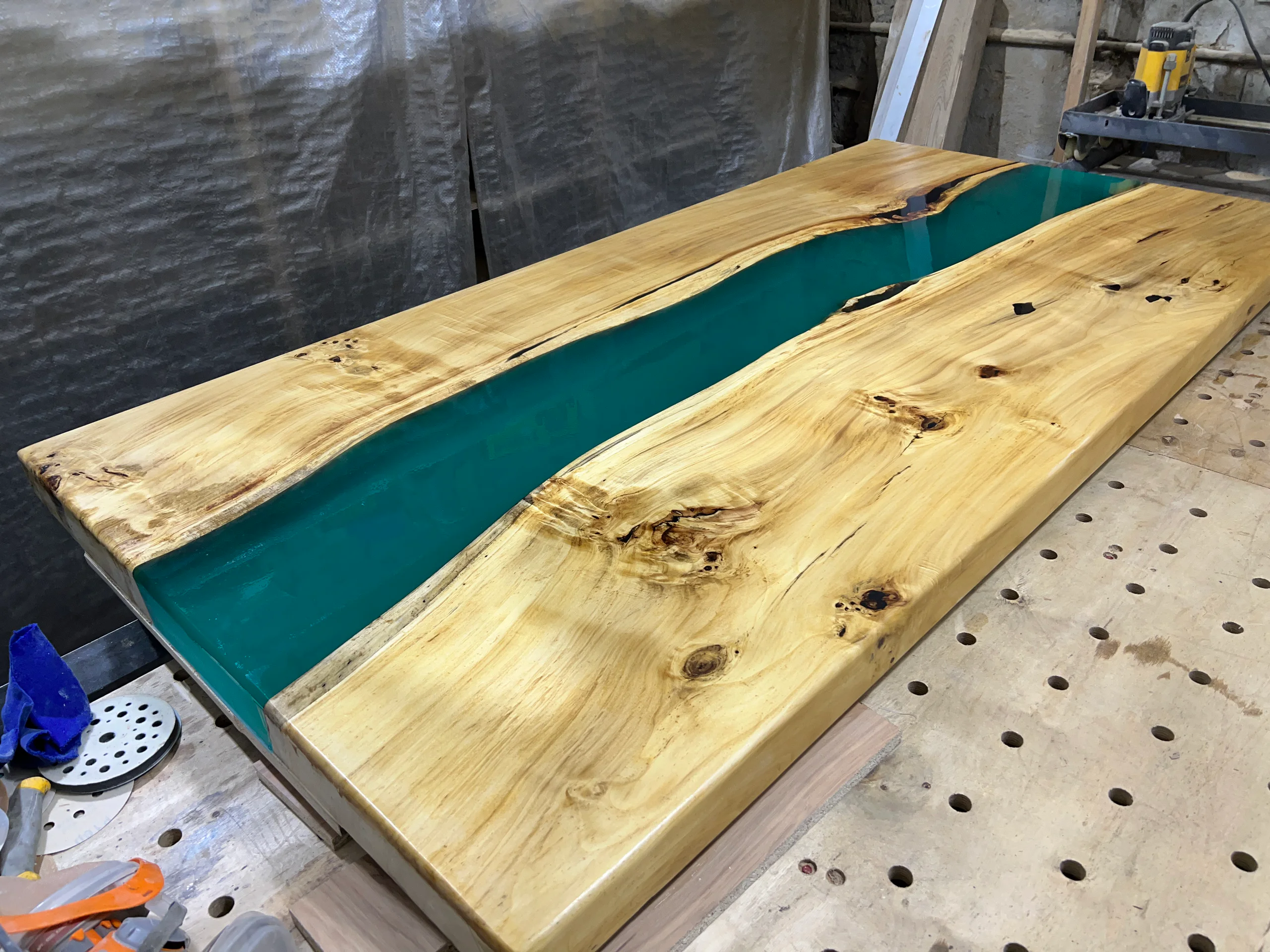
- Cracks and voids filled with resin
- from 50,000 ₽ per m²
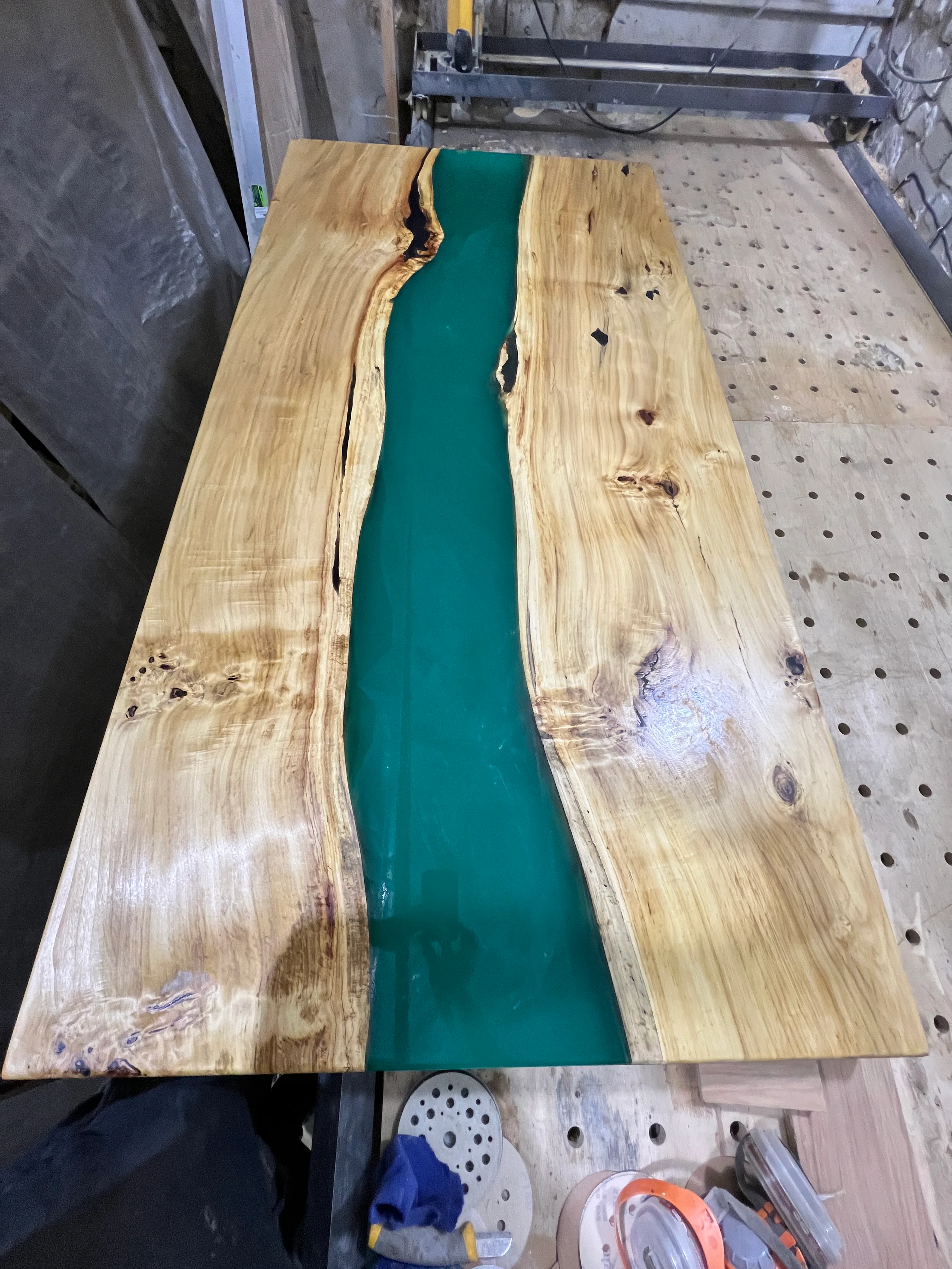
- Large resin pour (river table)
- from 70,000 ₽ per m²
- Base
- wood or metal, to be discussed
The story
How a Tabletop Comes to Life
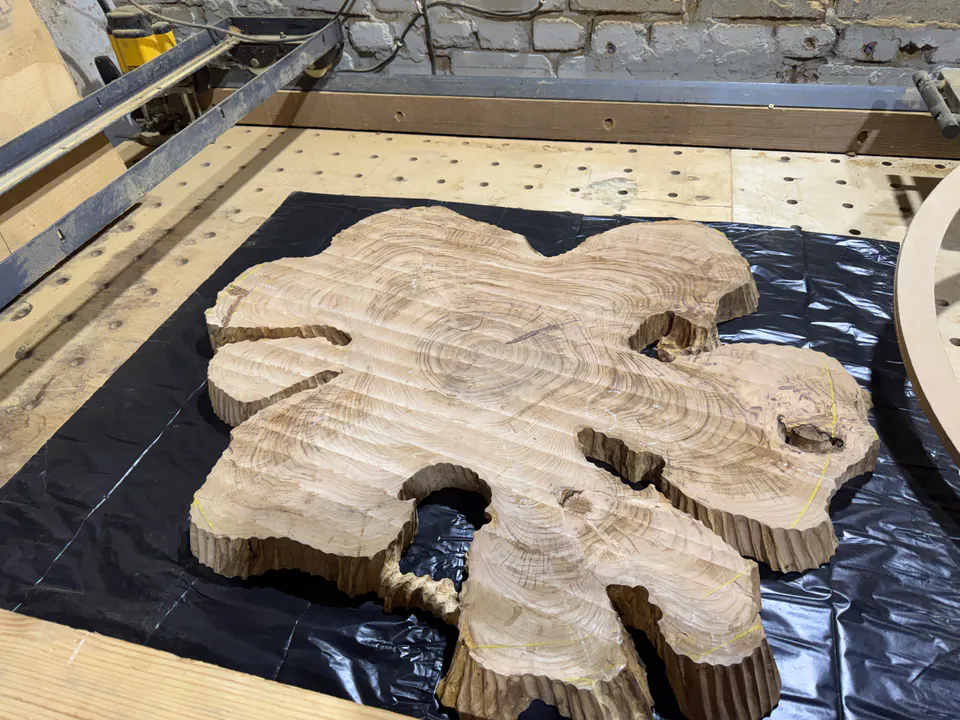
It all starts with choosing the slab. I show you several slabs from my stock, each with its own pattern, its own cracks, its own edge. You are not choosing "a chestnut tabletop" but one particular tree.
Then come flattening on the router sled, sanding, filling the cracks or pouring a resin river, and an oil finish. The price depends on the species, the area, the amount of resin and the base, so I work out the final figure for each project.
— the maker, MASSIV MASTER
About the species
Sweet chestnut Castanea sativa
Sweet chestnut is a tree of the Western Caucasus and the Black Sea coast, an heir to the ancient Colchis forests. Its wood resembles oak: bold growth rings, a warm honey tone and plenty of tannins, so chestnut tolerates moisture well and lasts for decades. Old trees often have a hollow heart — and those trunks give the most striking rounds.
About the species
Black mulberry Morus nigra
In the south, mulberry trees grow beside houses for decades. The wood is dense and hard, with contrasting rings from golden yellow to chocolate. Under oil the figure literally lights up, which makes mulberry good for both tabletops and cutting boards.
About the species
Ash Fraxinus
Ash is strong and springy, light in color, with a crisp ring pattern. It is used for furniture, stairs and tool handles — it carries load well and ages beautifully.
About the species
Oak Quercus
Oak is the benchmark of strength. Bog oak, which has lain for a long time in wet soil or water, darkens and develops graphite, almost black streaks — a material that cannot be imitated artificially.
About the species
Osage orange Maclura pomifera
Osage orange comes from North America; in southern Russia it was once planted in shelterbelts and living hedges. It is one of the densest and strongest woods there is: the Osage people made bows from it, and French settlers called it bois d'arc — “bow wood”. A fresh cut is bright yellow, and in daylight the wood slowly deepens to amber and honey.